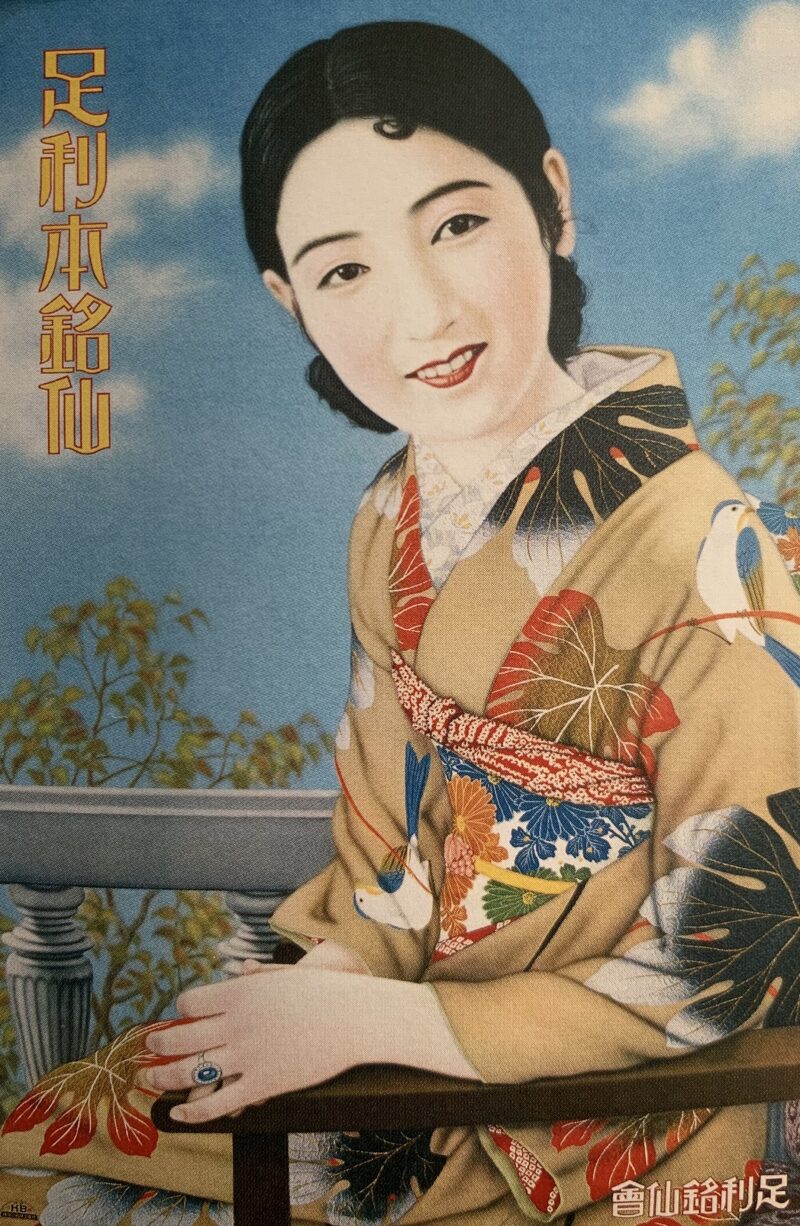
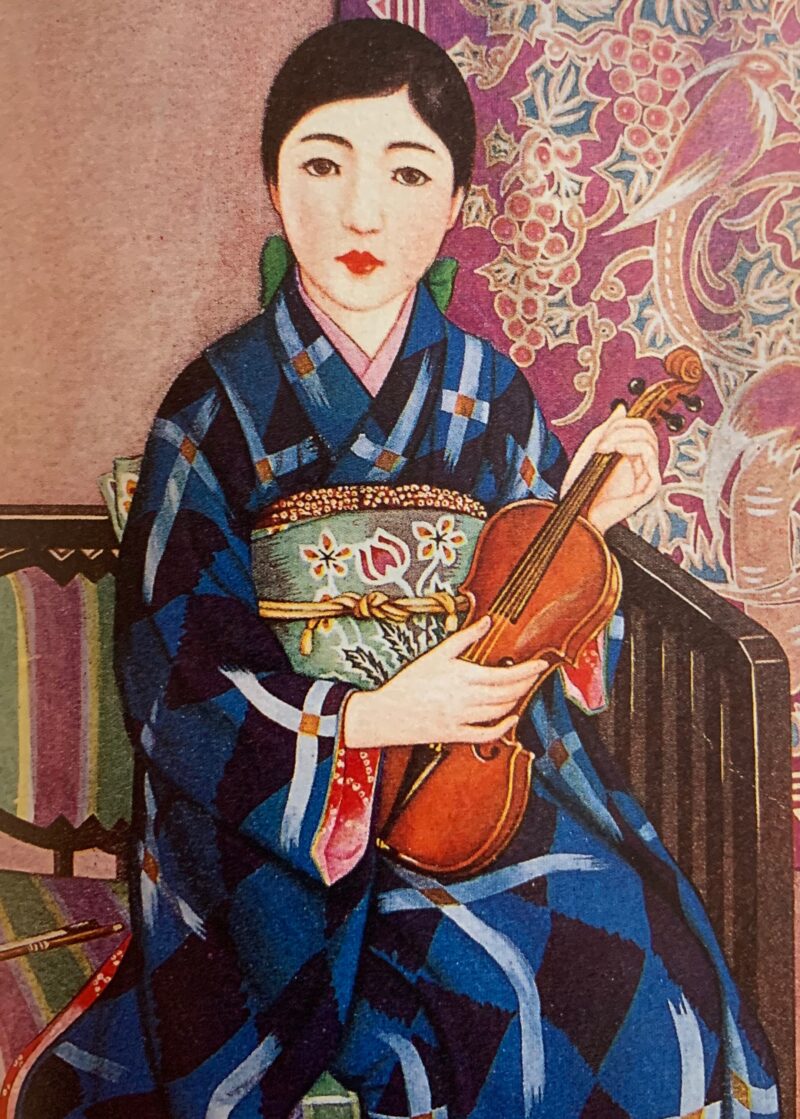
The textile technique which became the foundation of Meisen is stripes and ikat. In the 16th century, striped fabrics flowed into Japan through trade with China, India and Southeast Asia, and became popular in the Edo period. Meisen Kimono.The... Read More | Share it now!
Meisen Kimonos as Japanese Art Nouveau_The Age of Meisen 1905-1964
During the “modern” period, women’s clothes changed from kimonos to western clothes. After the 1960s, kimonos were produced for formal luxury goods. Meisen is Art Nouveau, when it is positioned in Japanese art history. Umberto Eco... Read More | Share it now!
Hanataue, Saotome and Noragi
I have traveled to the countryside of the northwestern part of Hiroshima to participate in the festival called “Hanataue”. It is a traditional event registered as UNESCO’s Intangible Cultural Heritage, in which people pray for good... Read More | Share it now!
“Kingyoya” Kiyokata and the four seasons
Before the 1960s, Japanese streets had various vendors. After that, the only things left were fish vendors, baked potatoes vendors, etc.The street vendors who made me feel early summer was the goldfish vendors. Kunisada Utagawa... Read More | Share it now!
“Peony” The Obi and Japanese patterns
Are Peony flowers the most frequently used motifs for kimono patterns?Peony came from China in the 8th century, but it soon became a flower loved by nobles and a symbol of beauty and fortune.Butterflies are said to be carnations of peony and there are... Read More | Share it now!