When my wife and I were running a vintage kimono business online, we exchanged emails with buyers all over the world. Most of the time, packages arrived quietly, and quiet reviews appeared on the site: “Thank you. The real thing is even more... Read More | Share it now!
The government-operated model silk mill_The Age of Meisen 1905-1964
The National Yarn Factory was established in Tomioka, Gumma in 1872. It is the Japanese first full-scale machine spinning factory. Joshu Tomioka Seishijo no Zu by Hasegawa Chikuyo, 1876 (Tomioka City art Museum, Ichiro Fukuzawa memory Museum... Read More | Share it now!
Modern Silk Roads_The Age of Meisen 1905-1964
The Peak production of cocoons in Japan was around 1930.The rural areas of northern and western Tokyo became influential production areas. Agrarian society played a critical role in the economic transformation of Meiji(1868-192) Japan. It was a... Read More | Share it now!
Kasuri met Chiné silk ?_The Age of Meisen 1905-1964
The textile technique which became the foundation of Meisen is stripes and ikat. In the 16th century, striped fabrics flowed into Japan through trade with China, India and Southeast Asia, and became popular in the Edo period. Meisen Kimono.The... Read More | Share it now!
Meisen Kimonos as Japanese Art Nouveau_The Age of Meisen 1905-1964
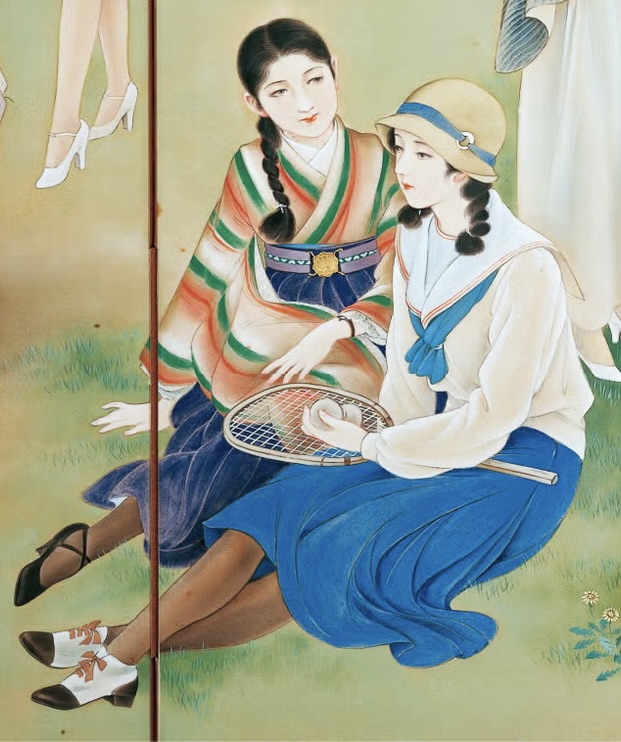
During the “modern” period, women’s clothes changed from kimonos to western clothes. After the 1960s, kimonos were produced for formal luxury goods. Meisen is Art Nouveau, when it is positioned in Japanese art history. Umberto Eco... Read More | Share it now!