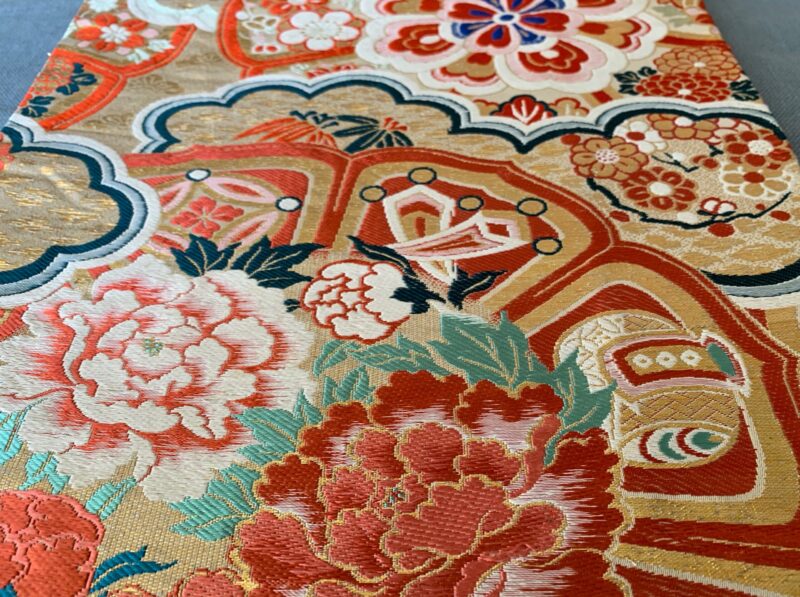
When my wife and I were running a vintage kimono shop, an order for a fukuro obi came in from Bhutan. I took the package to the small post office near our home, and the woman at the counter looked at the address and tilted her head. “Bhutan…? Where is that, again?” To be honest, I couldn’t have placed Bhutan on a map with much confidence either. The mountain region between India and Tibet. People who wear something resembling kimono. A small country that came up with Gross National Happiness as a measure instead of GDP. That was about all I knew.
When I received the order, I had to look up whether airmail to Bhutan was even possible. Most of our customers were in Europe and North America, with a few in Singapore and Hong Kong. Then suddenly, Bhutan. Her questions were detailed — the length of the obi, the width, whether the pattern continued on both sides. Soon after, another woman from Bhutan inquired about a maru obi. She wrote that fold lines were fine but worn-out spots were not, and sent me photographs of a damaged maru obi she had bought from another seller. “We make tego from these obi,” she explained.
A tego is a short, jacket-like garment that women in Bhutan wear over the kira, the ankle-length wrapped dress that is their national costume. Together with the wonju (a long-sleeved blouse worn underneath) and the rachu (a narrow embroidered cloth draped over one shoulder), the tego completes a woman’s formal national dress. It seems women are required to wear this attire in schools, government offices, and on ceremonial occasions. The tego itself is short and jacket-shaped, with broad lapels that fold back to reveal the blouse beneath. Because the kira is woven, the tego is usually made from a different fabric, in a colour that plays against the kira’s pattern.
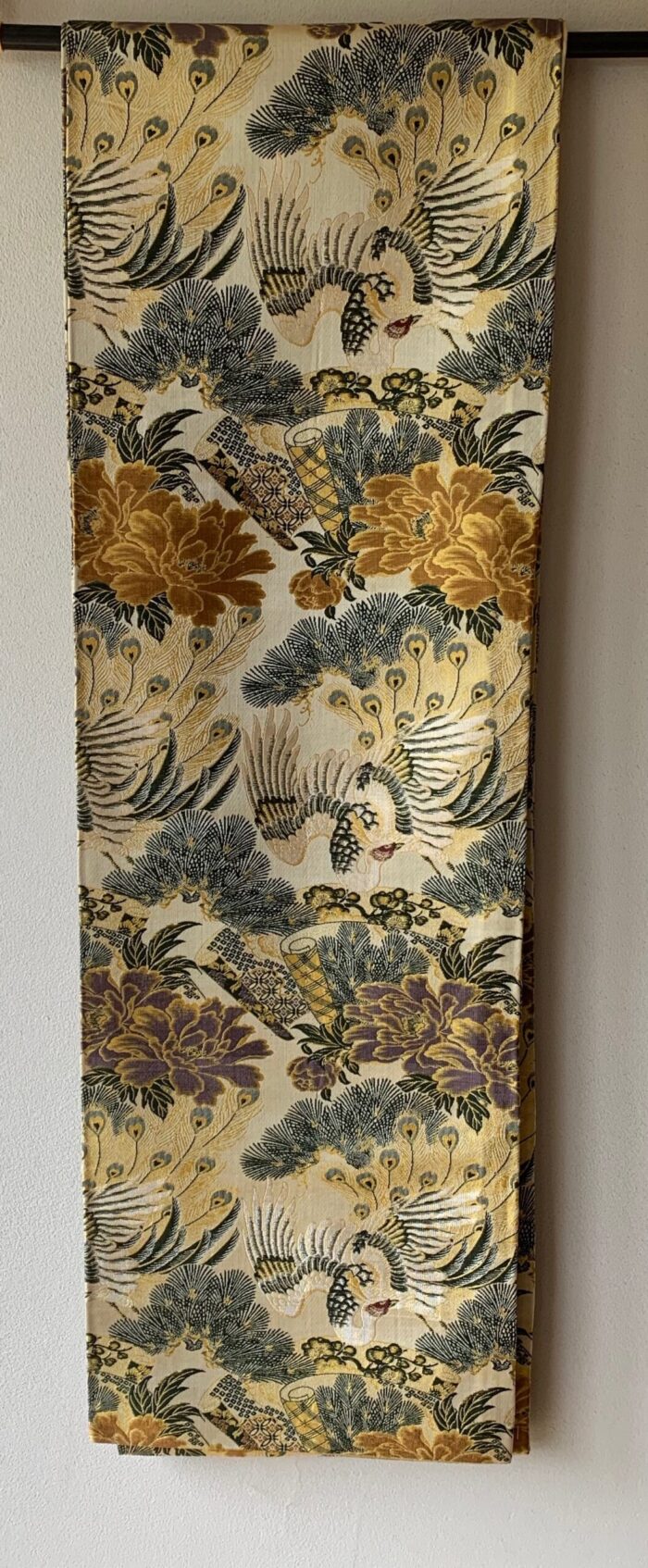
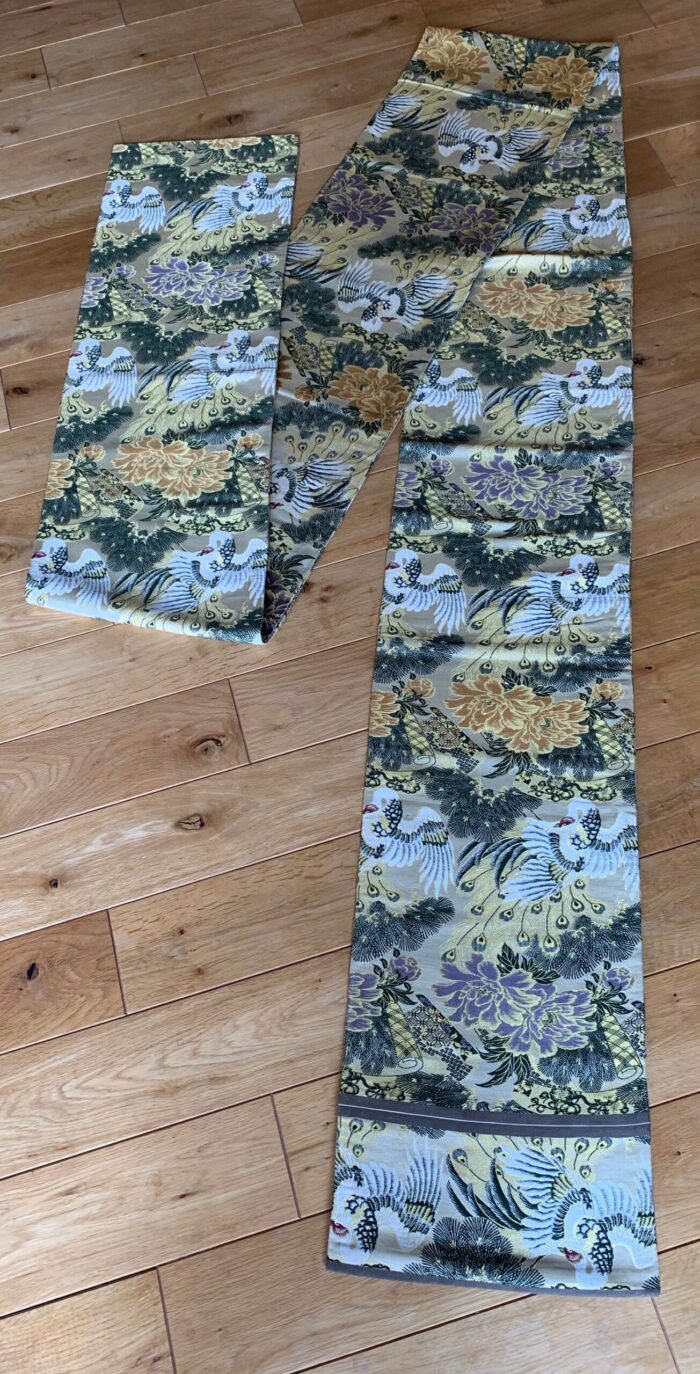
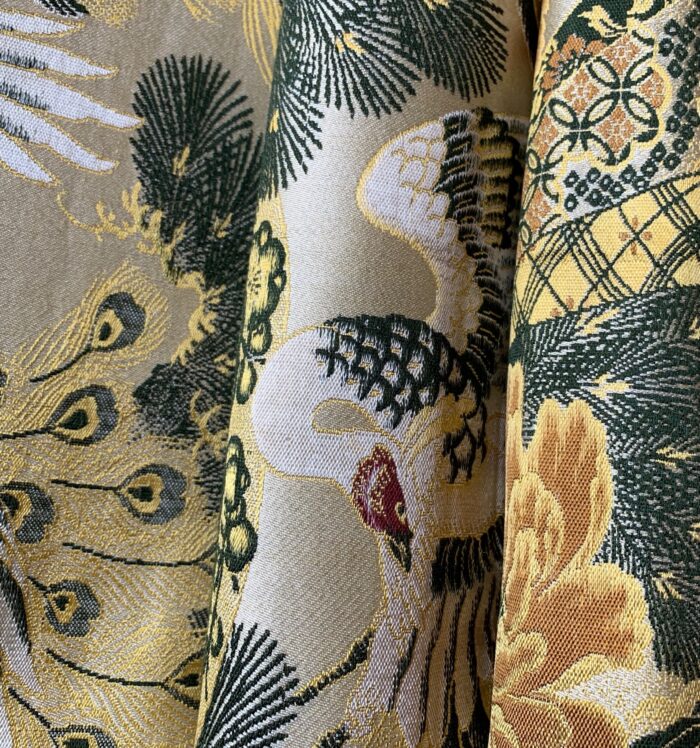
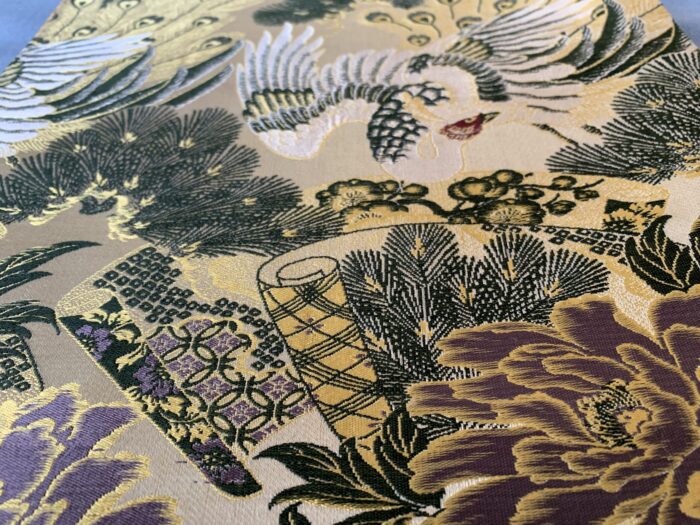
A maru obi is woven about 68 centimetres wide, then folded in half and stitched, so the finished obi is roughly 32 centimetres across and a little under four metres long. Because of this construction, the pattern is woven on both sides, with no front or back. A fukuro obi, by contrast, has its pattern on one side only, with a plain or simplified back. The reverse side was never meant to be seen. When you cut an obi open and tailor it into a jacket, this difference matters. A maru obi has enough fully woven cloth on both faces to allow proper tailoring of a tego.
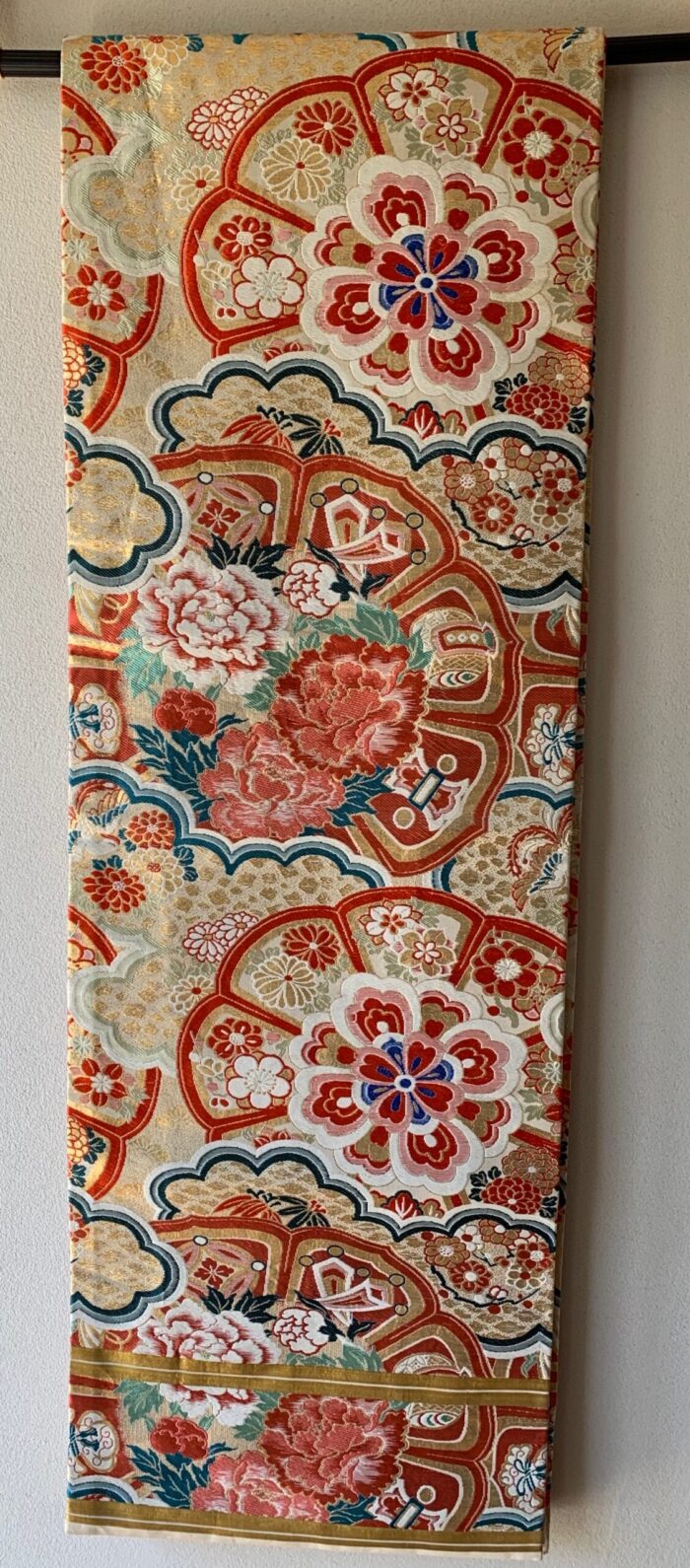
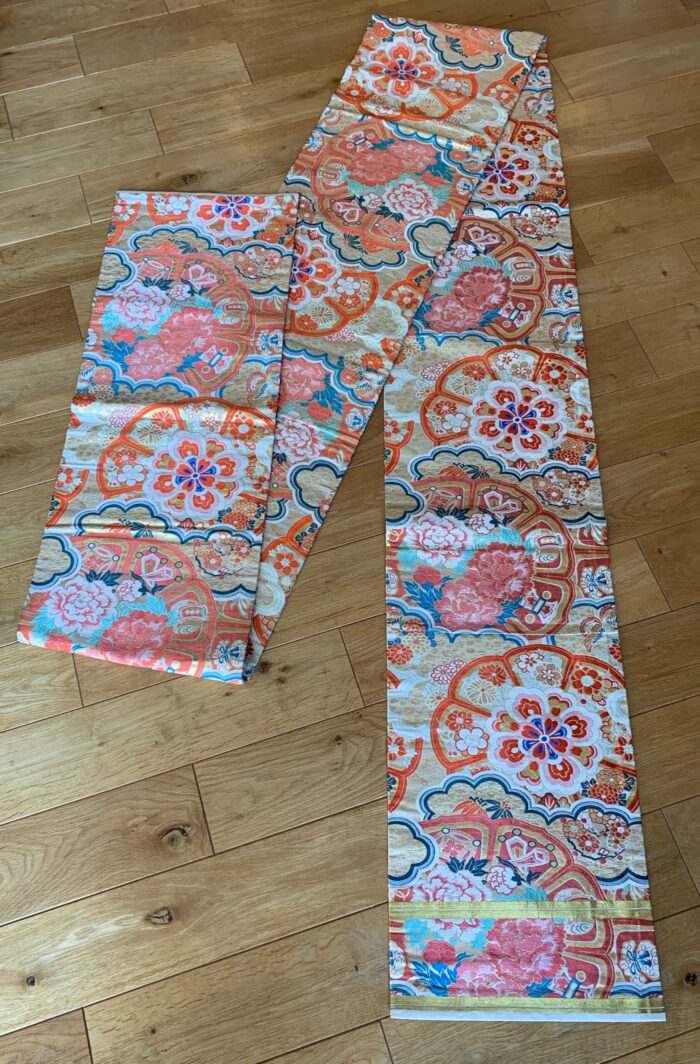
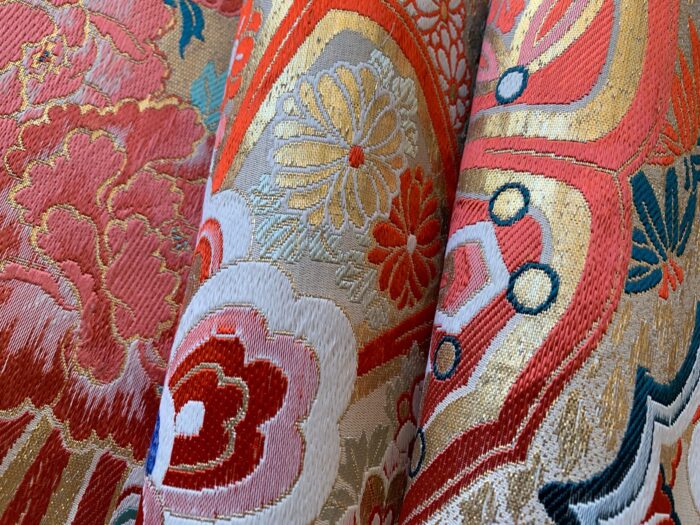
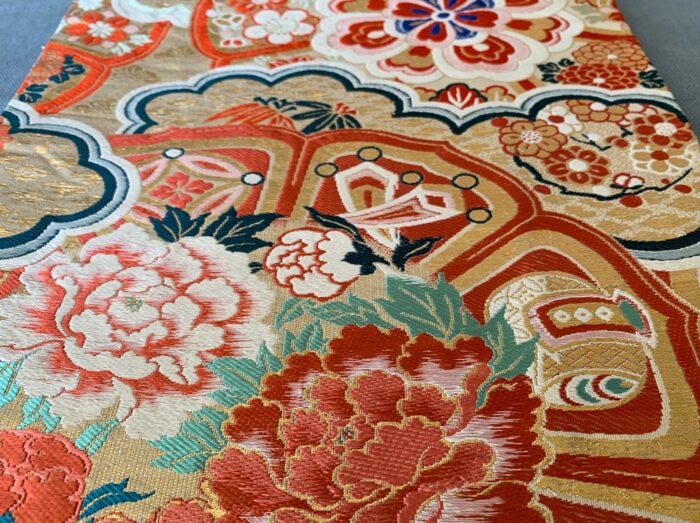
She continued to order maru obi from us. Counting only what remains in our email records, she bought ten. She once wrote that she would buy four to six per month if not for her credit card limit, and that she was looking into wiring funds directly from her bank. When she ordered five at once, we sent them in pairs in separate packages — a maru obi is heavy, and to keep shipping costs down, two per package was the limit. My wife slipped a small pouch made from fukuro obi cloth into each package as a gift.
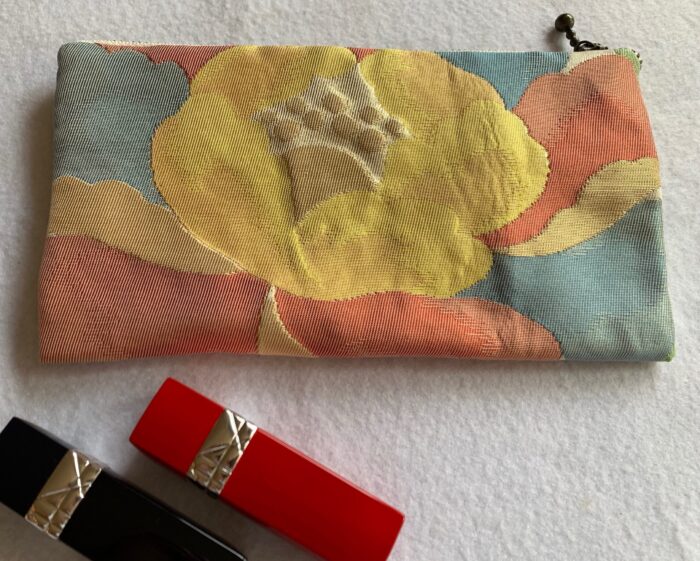
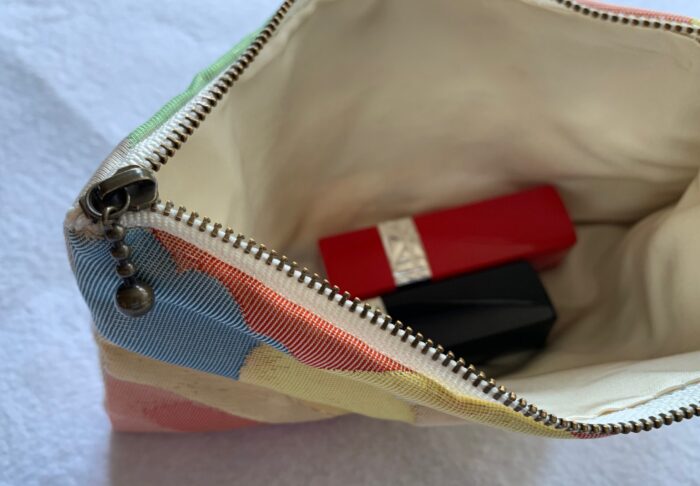
Some of the obi, she wrote, she planned to resell locally. Others she would keep for herself. “I think I am going to keep these two for myself. Thank you for finding them,” she once wrote. Another time: “I have seen people make fashionable tegos out of fukuro obi. Personally, I prefer maru as it can be used to make traditional tego, which to me looks more timeless. Fashions change so fast… so I feel it is better to stick with timeless pieces.”
In Japan today, maru obi are rarely made. What remains are mostly the obi worn by geisha. For ordinary kimono life they are too heavy, too elaborate. Most of the maru obi we sold had been resting in old chests of drawers for decades, since before the war. In Bhutan, those same obi were being opened up and remade into garments that women would wear at celebrations.
Why was this happening at all?
When I started looking, I found that Bhutan was no longer the quiet, closed country of my vague impression. India’s economic growth had driven up demand for electricity, and Bhutan — running almost entirely on Himalayan hydropower — had become an electricity exporter. The economy was growing, and so was the disposable income of younger women in the cities.
There was also a moment I had completely missed. In November 2011, King Jigme Khesar Namgyel Wangchuck of Bhutan and Queen Jetsun Pema came to Japan as state guests. The Queen was twenty-one. The international press called her “the Kate Middleton of the Himalayas.” At a welcome dinner in Kyoto, both Their Majesties appeared in Japanese kimono. The young Queen had become a fashion icon at home and abroad. From what our customers told me, a quiet movement followed. Chinese silk was widely available in Bhutan, but Japanese kimono and obi fabric was preferred — the variety of design was greater, the quality finer. Behind it all was the image of a young queen who had worn kimono in Kyoto.
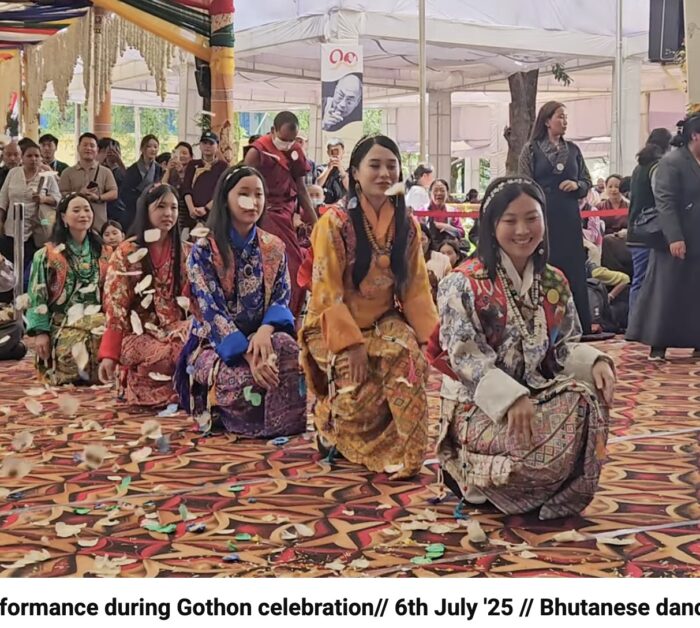
Whether those ten or so obi really became tego, I will never know. Maru obi are barely worn in Japan anymore. I hope they are living a second life on the other side of the Himalayas, tailored into tego, worn by young women at celebrations. Without our small shop, my wife and I would never have exchanged a word with anyone in Bhutan. For that alone, it was worth running it.
