コンテンツへスキップ
cafe93cool
vintage kimonos / aesthetic sense / history
  • pinterst
  • home
  • haori
  • meisen haori
  • kimono
  • meisen kimono

投稿者: tetsu

Hello from Hokkaido. With my wife, I once ran a small vintage kimono shop online for several years, shipping around 1,000 pieces — kimono, haori, and obi — around the world. The photos and stories on this blog are drawn from those years. I also write as a journalist on modern public art.
seasons/yukata

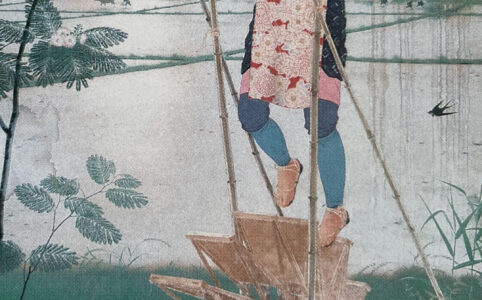
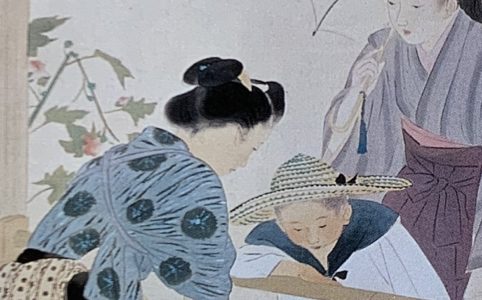
“Shobuyu” Kiyokata and the four seasons

Posted on 2020-05-15 by tetsu

There is a bathing called “Shobuyu” for the seasonal event in May.At “Tango no Sekku” on May 5, Japanese were in “Shobuyu” or iris bath for the purpose of avoiding mischief.At that time, it was said that they were... Read More | Share it now!

cafe/seasons

Kashiwa-mochi(柏餅)The Beauty of wagashi

Posted on 2020-05-05 by tetsu

May 5th is a national holiday in Japan called “Children’s Day”. Originally called “Tango no Sekku”(端午の節句), it was the festival day for boys. On the other hand, March 3rd is the festival day for girls.... Read More | Share it now!

cafe

“Haruno” The Beauty of wagashi

Posted on 2020-04-26 by tetsu

The third stage in the history of Japanese sweets is the period of change from the Kamakura period to the Muromachi period (12th -15th century). During this period, Buddhist monks who studied in China spread Zen Buddhism. They popularized not only the... Read More | Share it now!

hakama/kimono

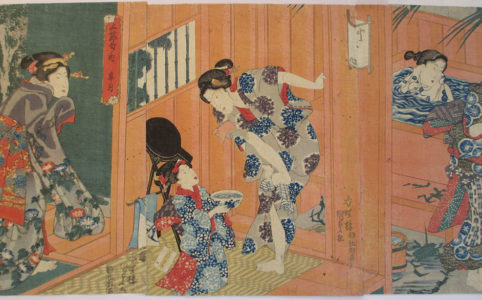
“Samurai” The kimono in Ukiyoe

Posted on 2020-04-22 by tetsu

There are formal and casual clothes. In some times, it was required as a rule rather than as common sense. Especially for the pre-modern upper class, such codes were very important. Rather than economic disparity, the difference in status became the... Read More | Share it now!

cafe

“Mizu no Ne” The Beauty of wagashi

Posted on 2020-04-15 by tetsu

Wagashi has been historically established through five stages. ① fruits and nuts② Mochi(rice cake) and Dango(dumplings) ③ Karagashi from China ④ Tenjin brought back by a Buddhist priest who studied Zen Buddhism in China ⑤ Nanbangashi, a... Read More | Share it now!

投稿のページ送り

« 前へ 1 2 3 4 … 6 次へ »

about

cafe93cool is a blog about vintage kimono and the world around them — meisen and other silks, haori, obi, and the patterns and stories woven into them. Most of the photos come from a small online shop my wife and I once ran. Welcome.


  • RSS

Recent posts

  • Where Is Bhutan? — At the Post Office Counter 2026-05-05
  • Shunga and Kimono: Klimt’s Japonismus from Gustav Klimt: Vienna-Japan 1900 2026-05-04
  • “This is not silk!” — The moment a woman in Mexico opened the box 2026-04-25
  • The government-operated model silk mill_The Age of Meisen 1905-1964 2024-08-17
  • Modern Silk Roads_The Age of Meisen 1905-1964 2024-08-16
  • Kasuri met Chiné silk ?_The Age of Meisen 1905-1964 2024-08-14
  • Meisen Kimonos as Japanese Art Nouveau_The Age of Meisen 1905-1964 2024-08-13
  • Hanataue, Saotome and Noragi 2021-06-12
  • “Kingyoya” Kiyokata and the four seasons 2020-06-26
  • “Peony” The Obi and Japanese patterns 2020-06-22

category

  • cafe (4)
  • film (3)
  • hakama (5)
  • haori (2)
  • kimono (6)
  • meisen (3)
  • obi (6)
  • pattern (5)
  • seasons (4)
  • shop-stories (5)
  • the-age-of-meisen (4)
  • yukata (6)

search

archive

  • 2026年5月 (2)
  • 2026年4月 (1)
  • 2024年8月 (4)
  • 2021年6月 (1)
  • 2020年6月 (2)
  • 2020年5月 (2)
  • 2020年4月 (10)
  • 2020年3月 (8)

tag

aikido azuki buddhism carp cherry blossom edo exhibition fukuro obi Hokusai ikat kanzemizu kasuri kendo Klimt koi Kyotaka Kaburaki Kyoto to Catwalk kyudo maiko meiji nagajuban namagashi nemaki nishikigoi onsen peony raw silk saijiki sakura samurai sash sento spring summer Tango no Sekku Tokyo National Museum tomesode toyokuni tsumugi ukiyoe Utskushii Kimono V&A wagashi wedding yokan
© 2026 cafe93cool
Powered by WordPress | Theme: Graphy by Themegraphy