
When my wife and I were running a vintage kimono business online, we exchanged emails with buyers all over the world. Most of the time, packages arrived quietly, and quiet reviews appeared on the site: “Thank you. The real thing is even more beautiful than the photos.” Sometimes, things went differently.
A woman in Mexico chose this haori jacket on her second purchase from our shop. It was $22.

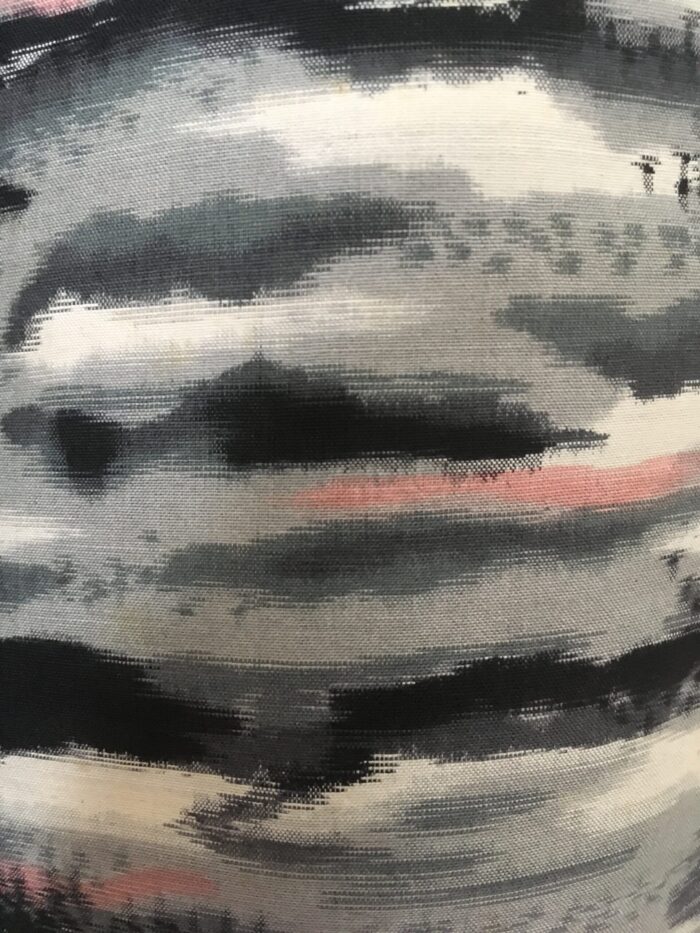
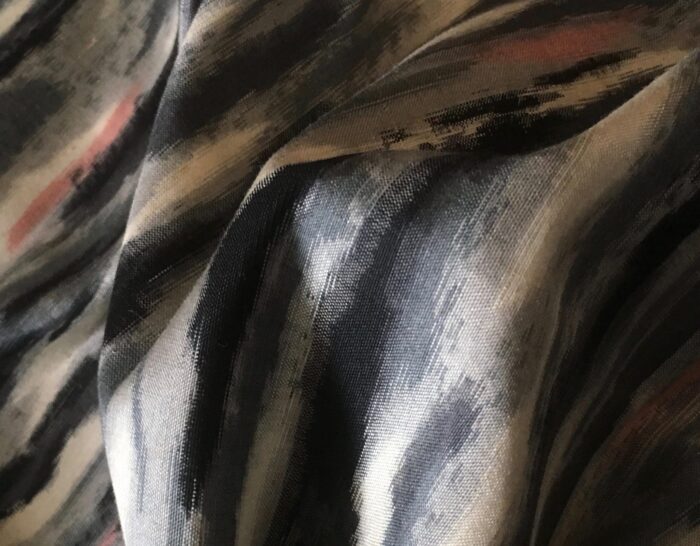
The layers of black, gray and white look like ink lines drawn across the horizon — or flowing water, or clouds stacking upon clouds. The designers of meisen kimono may have layered the visual language of modernist painting — pointillism, perhaps — on top of Japan’s traditional water patterns like kanzemizu. What she saw in this pattern — waves, clouds, or just abstraction — only she knows. Here and there, a thin line of pink runs through.
The email she sent was short. “This is not silk!”
Before that, she had bought another haori from us. It was her first purchase. A soft, draping haori made of typical silk. She posted a photo of herself wearing it as a jacket on Instagram. I think she liked it.
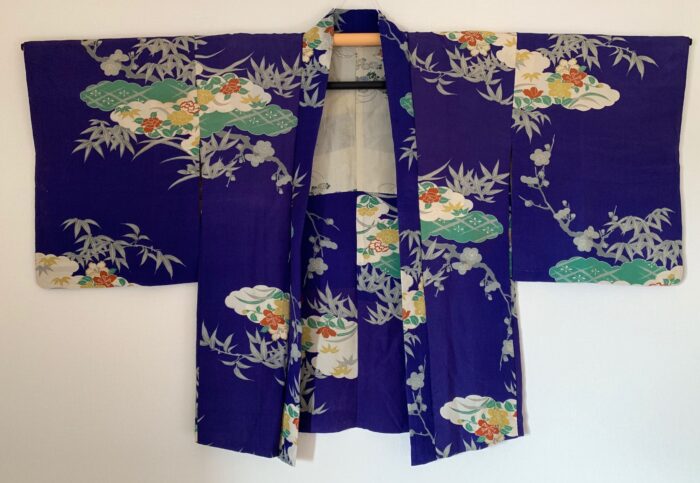
Then, browsing our shop again, the photo of this black-and-white meisen must have caught her eye. The pattern was modern, interesting. A different type from her first haori, but listed under the same category: “silk haori.” I think that is what she thought when she bought it.
A photo cannot convey texture.
When you touch the actual fabric, it feels like sandpaper. Your fingertips catch on the surface. When I first picked up this piece myself, I was not sure for a moment whether it was silk at all.
This is the true nature of the textile called meisen.
From the Meiji era through the early Showa period, Japan exported raw silk in large quantities to America and elsewhere. Fine silk thread, reeled from good cocoons, was carried by ship and railroad to New York, where it became stockings and luxury dresses. Behind that, huge amounts of waste cocoons remained in Japan. Malformed cocoons, double cocoons where two silkworms had spun together (tamako) — cocoons that could not become raw silk thread.
Farming families had the technique to turn these into thread. They boiled the waste cocoons, pulled out the fibers by hand, twisted them into yarn. This was called tsumugi-ito — a knotty, stiff thread. With the development of spinning technology, tsumugi-ito came to be mass-produced, and meisen was mass-produced by a technique of dyeing the thread first, then weaving.
There are many kinds of silk kimono. Soft crepe (chirimen), glossy silk weave (rinzu), embroidered or yuzen-dyed tomesode and houmongi — these use raw silk thread. On the other hand, meisen, tsumugi, omeshi — these belong to the tsumugi-ito lineage. The same “silk,” but starting from different cocoons.
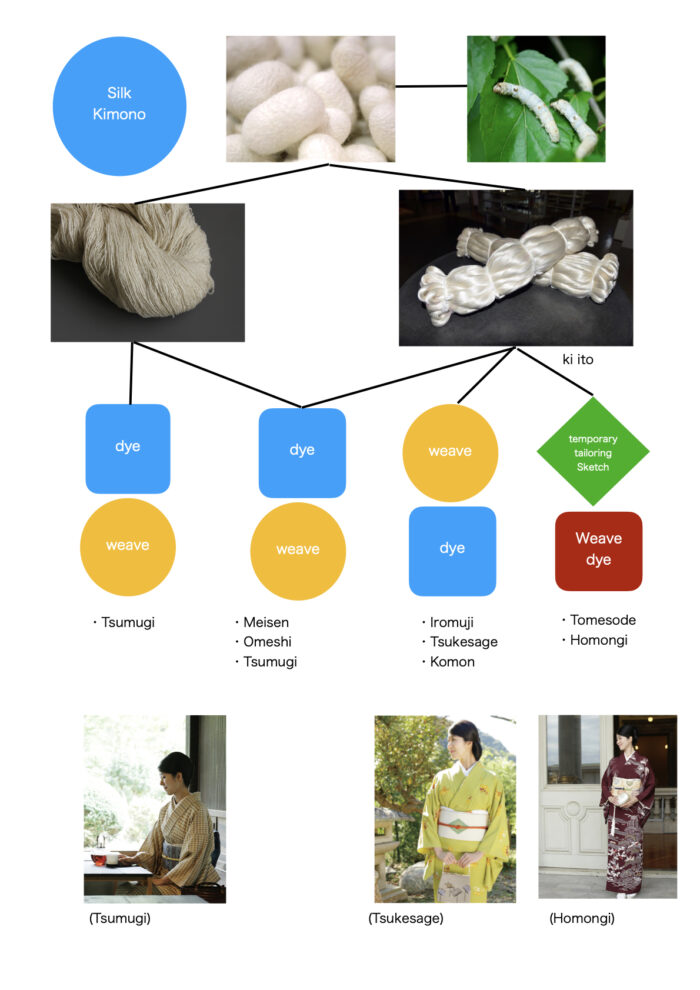
The haori she bought first was from the raw silk lineage. The black-and-white haori was from the tsumugi-ito lineage. But in a photo, you cannot tell the difference.
I sent her an email explaining. I probably wrote something like this: “This is also silk. It is made from a strong silk thread called tsumugi, and the textile woven from it is called meisen. The texture is stiff, but that is its true quality.”
She did not reply.
I have a hand-drawn “haori map” that I made for customers. The vertical axis is texture — soft to hard. The horizontal axis is position — casual to semi-formal. Meisen sits in the lower left: hard and casual. The classic haori she bought first sits higher up, in the soft zone.
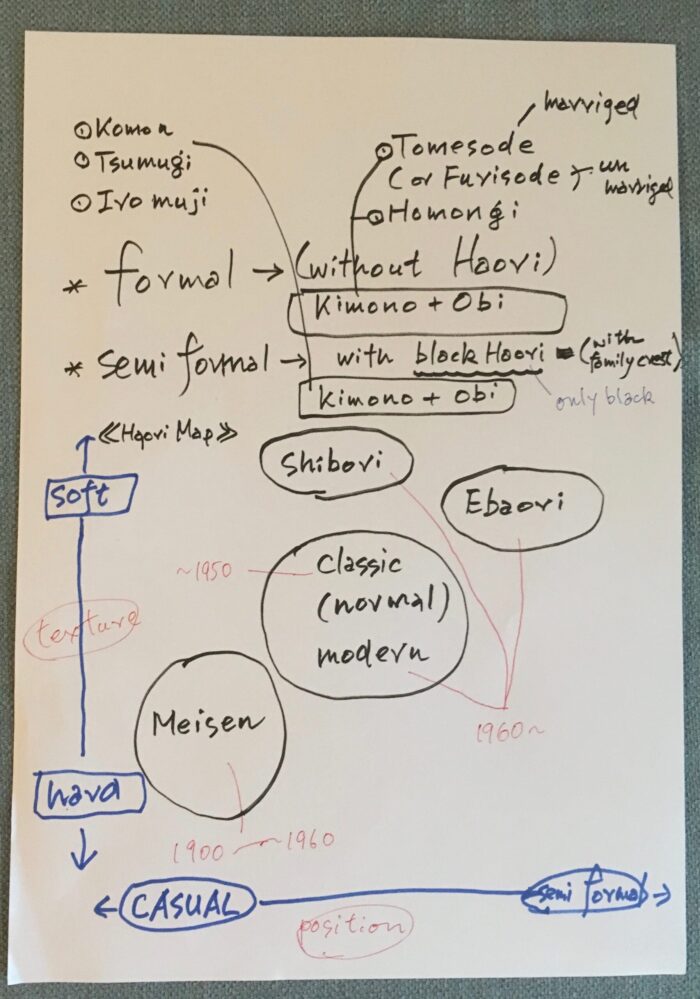
Within the same shop, under the same category of “silk haori,” this much range exists. For customers, this is naturally something they would not know.
What the woman in Mexico thought when she first saw the black-and-white haori, I do not know. Maybe she thought, “Oh, that’s lovely.” Maybe she thought, “That’s unusual.” I believe she was drawn to the pattern. She wanted to add that ink-wash wave pattern to her closet.
When she opened the box, picked it up, and the sandpaper texture touched her fingers, the judgment ran through her mind: “This is not silk.” She was not wrong. It was not the silk she had imagined.
But this, too, is silk. Another silk, born from waste cocoons.
Somewhere in Mexico, this haori must still be.
